
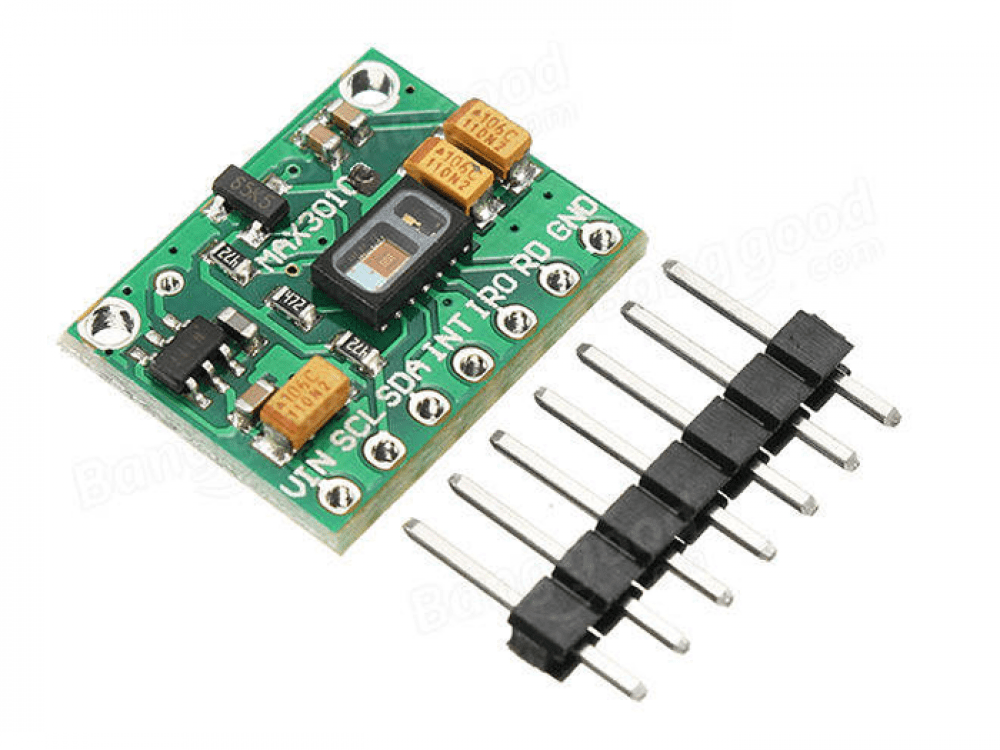
Description
The MAX30102 Sensor is a compact module that combines a pulse oximeter and heart-rate monitor in one package. It integrates red and infrared LEDs, a photodetector, optimized optics, and low-noise electronics to measure oxygen saturation (SpO₂) and heart rate accurately. The module communicates via I²C interface, making it easy to interface with microcontrollers like Arduino, ESP32, and Raspberry Pi. It’s widely used in health monitoring, fitness trackers, wearable devices, and DIY biomedical projects.
Key Features
-
Measures heart rate and blood oxygen saturation (SpO₂)
-
Integrated red and infrared LEDs and photodetector
-
Low-noise analog signal processing
-
I²C interface for easy microcontroller communication
-
Compact, low-power module suitable for wearables
Specifications
| Feature | Details |
|---|---|
| Operating Voltage | 1.8–3.3V |
| Communication | I²C (SCL, SDA) |
| LEDs | Red and Infrared |
| Detection Range | Heart Rate: 30–250 BPM, SpO₂: 0–100% |
| Current Consumption | ≤600 µA (typical) |
| Dimensions | 20 × 16 × 3.5 mm |
Applications
-
Wearable health monitoring devices
-
Fitness trackers and smartwatches
-
Heart rate and SpO₂ monitoring
-
DIY biomedical and IoT health projects
-
Health-related research and prototyping
Compatible Boards / Circuits
-
Arduino (Uno, Nano, Mega)
-
ESP32 / ESP8266
-
Raspberry Pi (via I²C)
-
Can interface with displays, data loggers, and IoT health dashboards
Reviews
There are no reviews yet.